
5 Stories to Share With Your Class This Week
5–11 October 2026
Five interesting stories to spark curiosity, conversation and connection in your classroom this week. Read them together, explore the questions and see where the conversation takes you.

Ireland
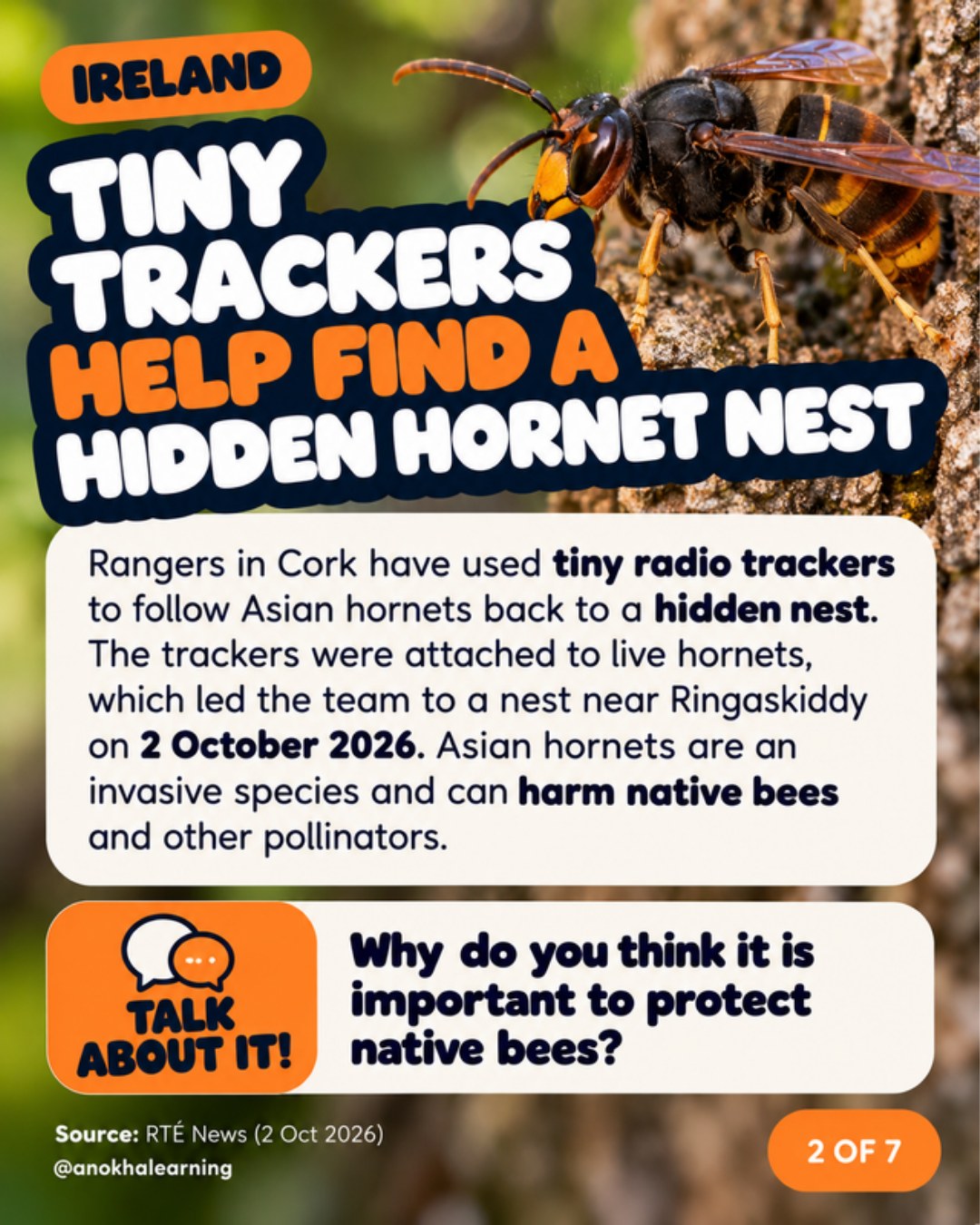
Tiny Trackers Help Find a Hidden Hornet Nest
This week, rangers from the National Parks and Wildlife Service found a hidden Asian hornet nest near Ringaskiddy in County Cork. They used tiny tracking transmitters to do it.
Rangers attached miniature transmitters to captured hornets. When the hornets flew home, the team could follow them back to their nest, which was found on Friday 2nd October 2026.
Why does it matter? Asian hornets are an invasive species, which means they do not belong in Ireland and can harm the wildlife that does. They ambush honeybees as the bees return to their hives, and bees and other pollinators help plants to grow. Finding the nest quickly helps to protect them.
The nest will now be safely removed, and the area will be watched in case there are more.
ABOUT IT
Why is it important to protect native bees and other insects?
Source: RTÉ News · Irish Times
Science · Ocean
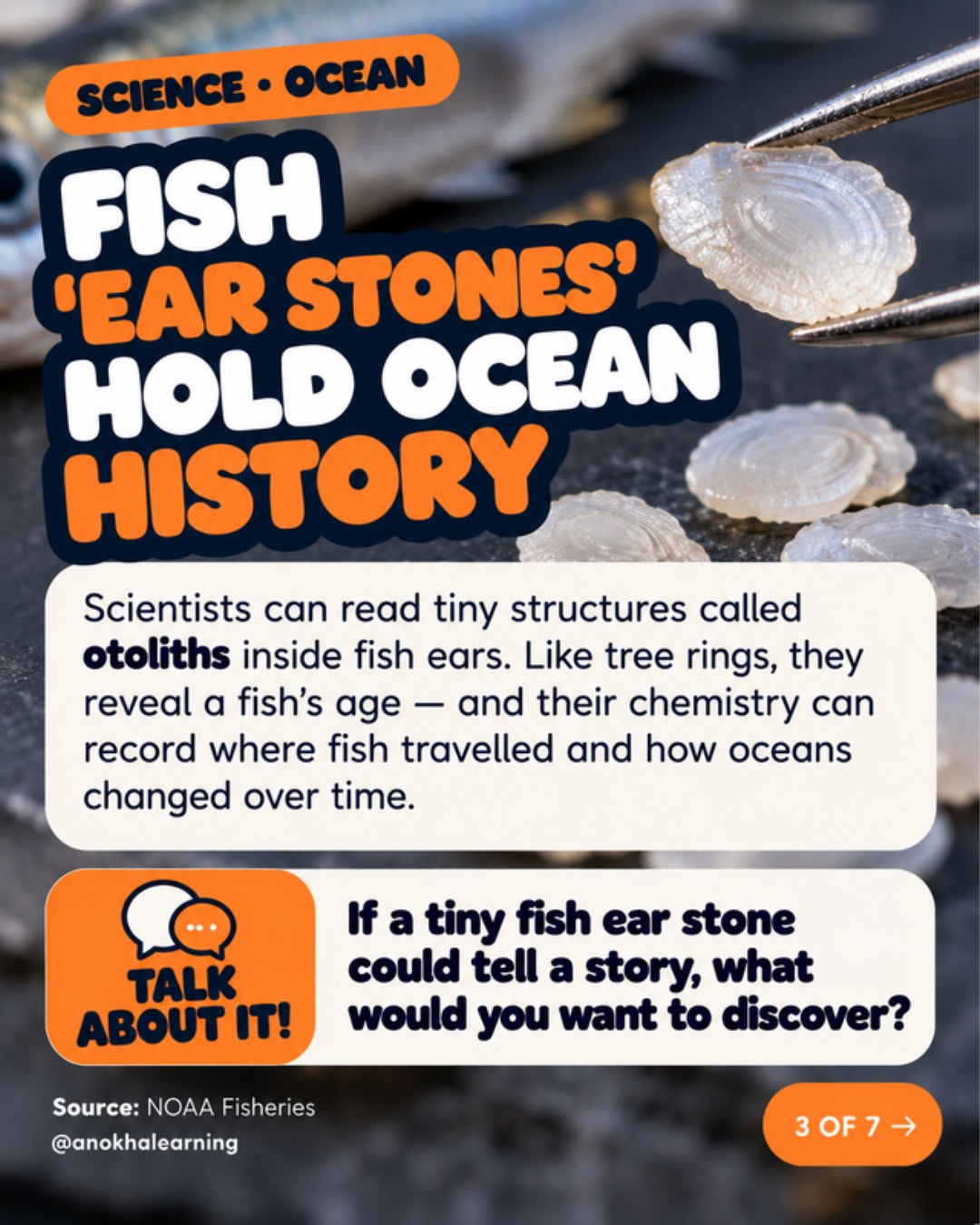
Fish ‘Ear Stones’ Hold Ocean History
Fish have tiny stones inside their heads called otoliths, or ear stones. They are part of a fish’s inner ear and help with hearing and balance.
An otolith keeps growing all through a fish’s life, adding new layers like the rings of a tree. Scientists count the layers under magnification to find out how old a fish is. Some fish live for a very long time: otoliths from orange roughy have shown fish that are more than 100 years old.
The layers also take in tiny amounts of chemicals from the water around the fish. Scientists can study these to learn where a fish has been and what the water was like.
That is why a fish ear stone can hold so much of the ocean’s history.
ABOUT IT
If a tiny fish ear stone could tell a story, what would you want to discover?
Source: NOAA Fisheries · PNNL
History · Türkiye
A 3,800-Year-Old Letter Read Without Opening It
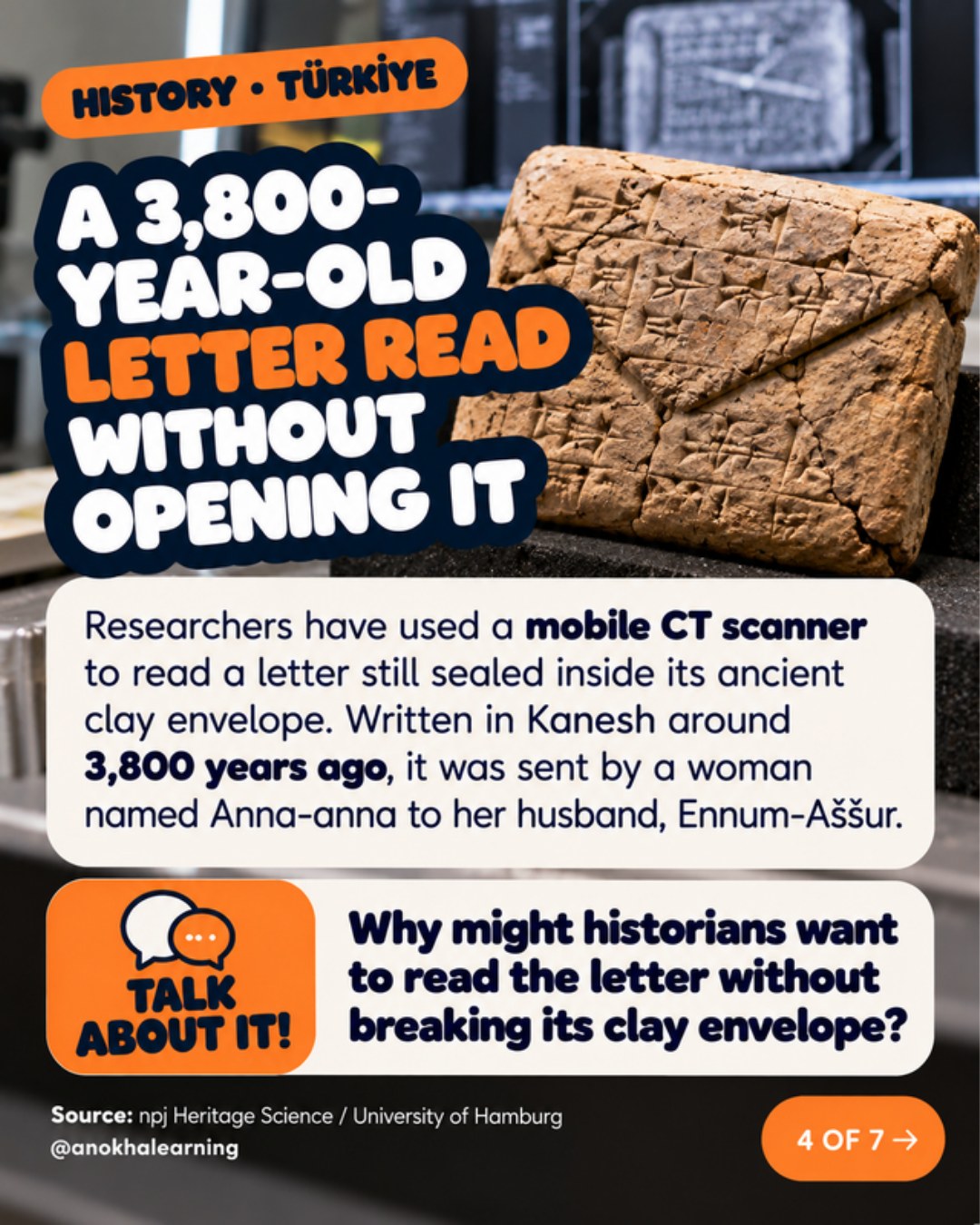
Imagine a letter that has stayed sealed for thousands of years. In the ancient city of Kanesh, in what is now Türkiye, people wrote letters on clay tablets and sealed them inside clay envelopes. Opening one would break it.
So researchers used a mobile CT scanner called ENCI. It builds a 3D picture of what is inside an object, so the envelope can stay closed. The scans let them read the hidden writing.
One letter, written more than 3,800 years ago, was sent by a woman named Anna-anna to her husband, Ennum-Aššur. She wrote about a debtor who refused to repay silver.
Researchers have now read hidden texts inside around 50 sealed clay envelopes this way. The originals are kept safe in a museum in Ankara.
ABOUT IT
Why might historians want to read the letter without breaking its clay envelope?
Source: npj Heritage Science · University of Hamburg
Wildlife · Discovery
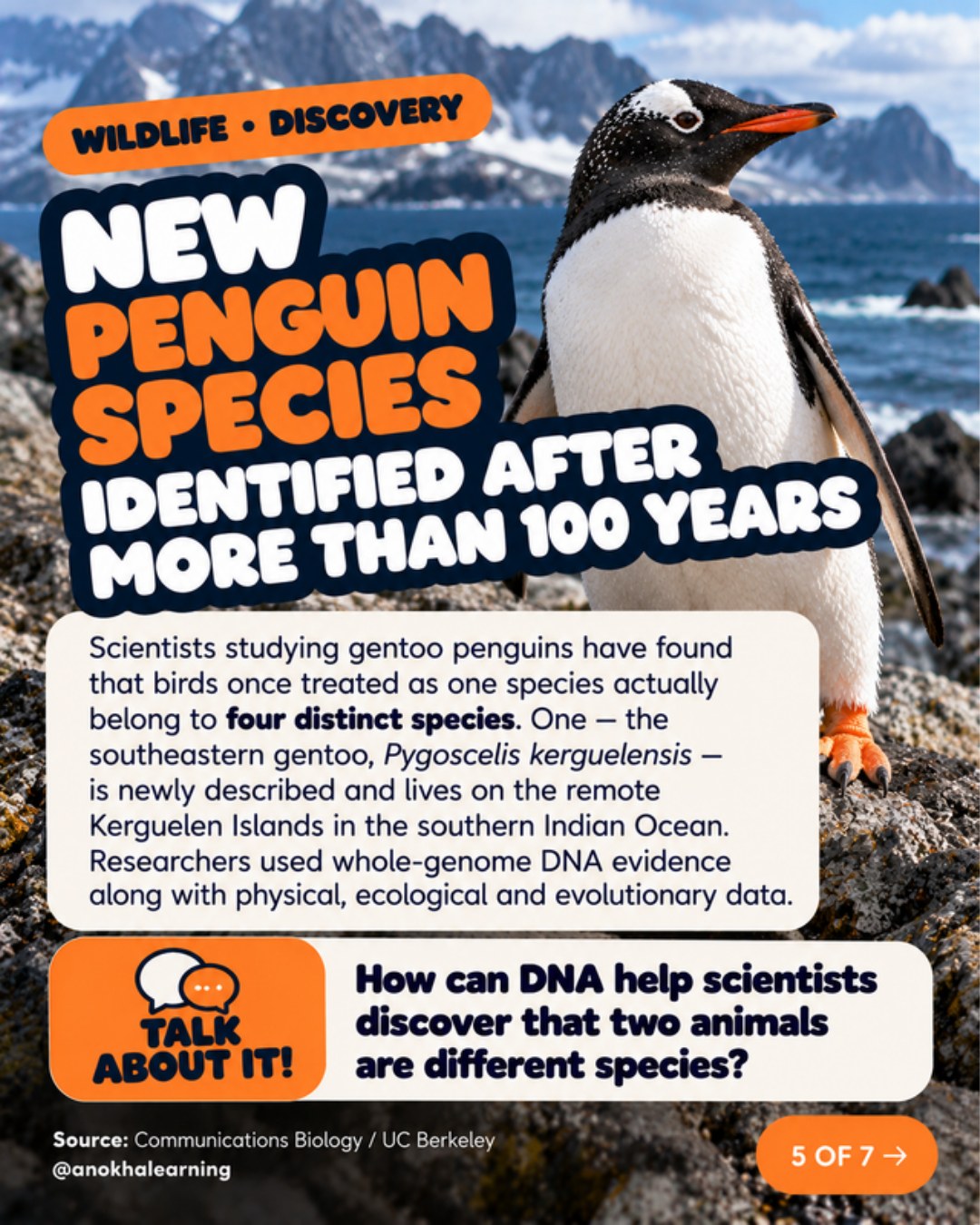
New Penguin Species Identified After More Than 100 Years
Scientists have found that gentoo penguins are not one species, but four. Gentoos live on islands and coasts around the Southern Hemisphere, including Antarctica.
One of the four is brand new to science: the southeastern gentoo, Pygoscelis kerguelensis, which lives on the Kerguelen and Heard Islands in the southern Indian Ocean. It looks very like the other gentoos, so scientists call it a cryptic species. That is a big reason it took so long to be noticed.
The team studied the whole DNA of 64 penguins from 10 colonies. They also looked at body shape, calls, breeding times and diet. Together, the evidence showed the groups are separate species.
It is the first new penguin species named in more than 100 years.
ABOUT IT
How can DNA help scientists discover that two animals are different species?
Source: Communications Biology · UC Berkeley
Geography · Indonesia
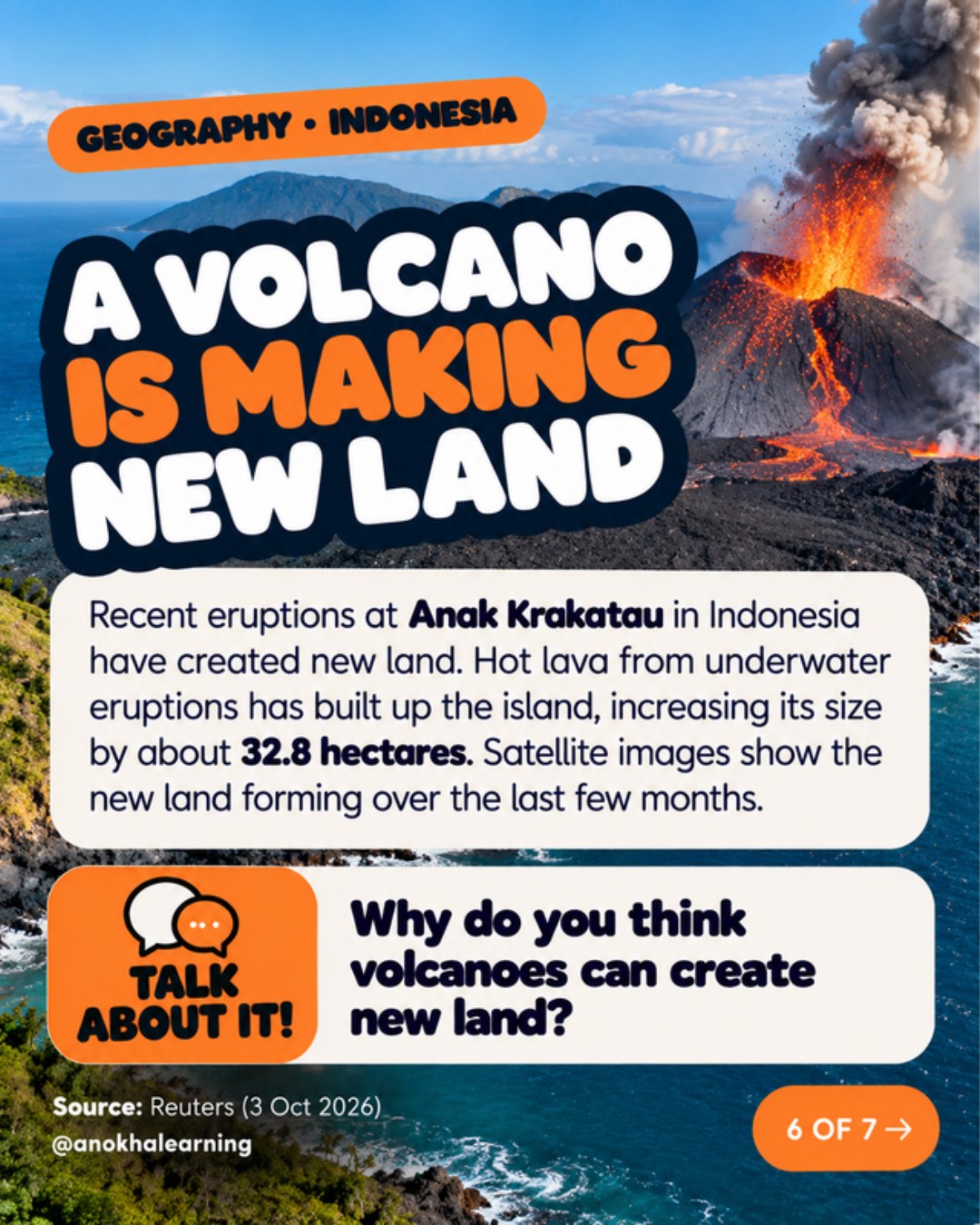
A Volcano Is Making New Land
Anak Krakatau is a volcano in Indonesia, in the Sunda Strait between the islands of Java and Sumatra. This week, Indonesia’s Geology Agency reported that eruptions and lava flows have made the volcano bigger by about 32.8 hectares, which is around 81 acres.
Satellite images also spotted two other new areas of land near the volcano.
How can a volcano make land? Lava is melted rock. When it cools, it turns solid. If enough lava builds up, it can pile up above the water and become new land.
Not every eruption does this. What happens depends on the volcano and on where the lava goes.
ABOUT IT
Why do you think volcanoes can create new land?
Source: Reuters
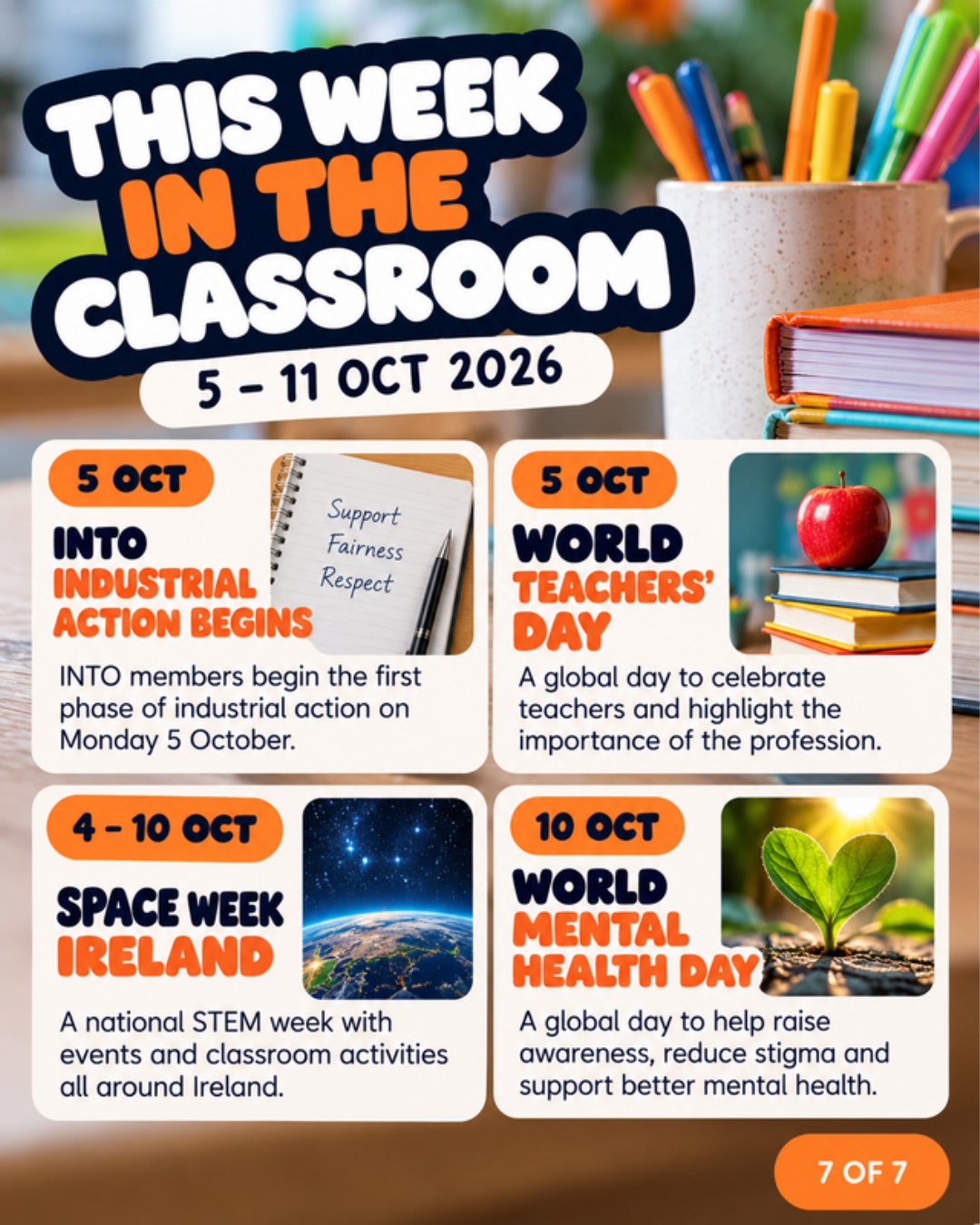
This Week in the Classroom
5–11 October 2026
- Mon 5th Oct
INTO industrial action begins
The first phase of INTO industrial action begins: non-co-operation with Croke Park hours, including no pre- or post-school supervision. A 24-hour strike is planned for Wednesday 14th October.
Source: INTO
- 5th Oct
World Teachers’ Day
A global day, led by UNESCO, to celebrate teachers and the importance of the profession.
Source: UNESCO
- 4th–10th Oct
Space Week Ireland
Ireland’s national STEM week for space, held alongside World Space Week (4th–10th October).
Source: World Space Week
- 10th Oct
World Mental Health Day
A global day to raise awareness of mental health and support better mental health.
Source: WHO
Want more classroom ideas?
Get next week’s stories
Join the Anokha Learning email list for new Classroom Stories, free resources and useful teacher support.
Over 10,000 Irish primary teachers have taken an Anokha course
Bookings open in April
Summer 2027 bookings are not open yet, and the dates are not confirmed until the Department publishes the 2027 programme. Leave us your email and we will tell you the day booking opens, before it goes anywhere else.
Tell me when bookings openOne email when bookings open. Unsubscribe any time.