
Friendship is something children practise in small moments throughout the school day. Inviting someone into a game, listening when a classmate is speaking and noticing when someone has been left out are all useful starting points for talking about what being a good friend means.
Here are a few simple activities that can help children explore friendship in the classroom.
1. Start with a friendship conversation
Before introducing a worksheet, ask the class what a good friend actually does.
Some useful questions include:
- How can you help someone feel included in a game?
- What does good listening look like?
- What could you do if someone was playing alone?
- Can two friends disagree and still be friends?
Encourage children to give specific examples rather than simply saying that friends should be nice.
A short conversation can work well before yard time, during circle time or as part of a class discussion.
2. Practise one small act of friendship
Choose a familiar classroom situation.
For example, imagine that two children are playing a game when another child asks to join.
Ask the class:
“What could the children say or do?”
Let children suggest different ways of responding. Discuss which responses would help everyone feel included.
You can repeat the activity using situations involving taking turns, sharing materials or listening to different opinions.
3. Use our free I Can Be a Friend worksheet
Our free friendship worksheet asks children to draw or write about ways they can be a good friend.
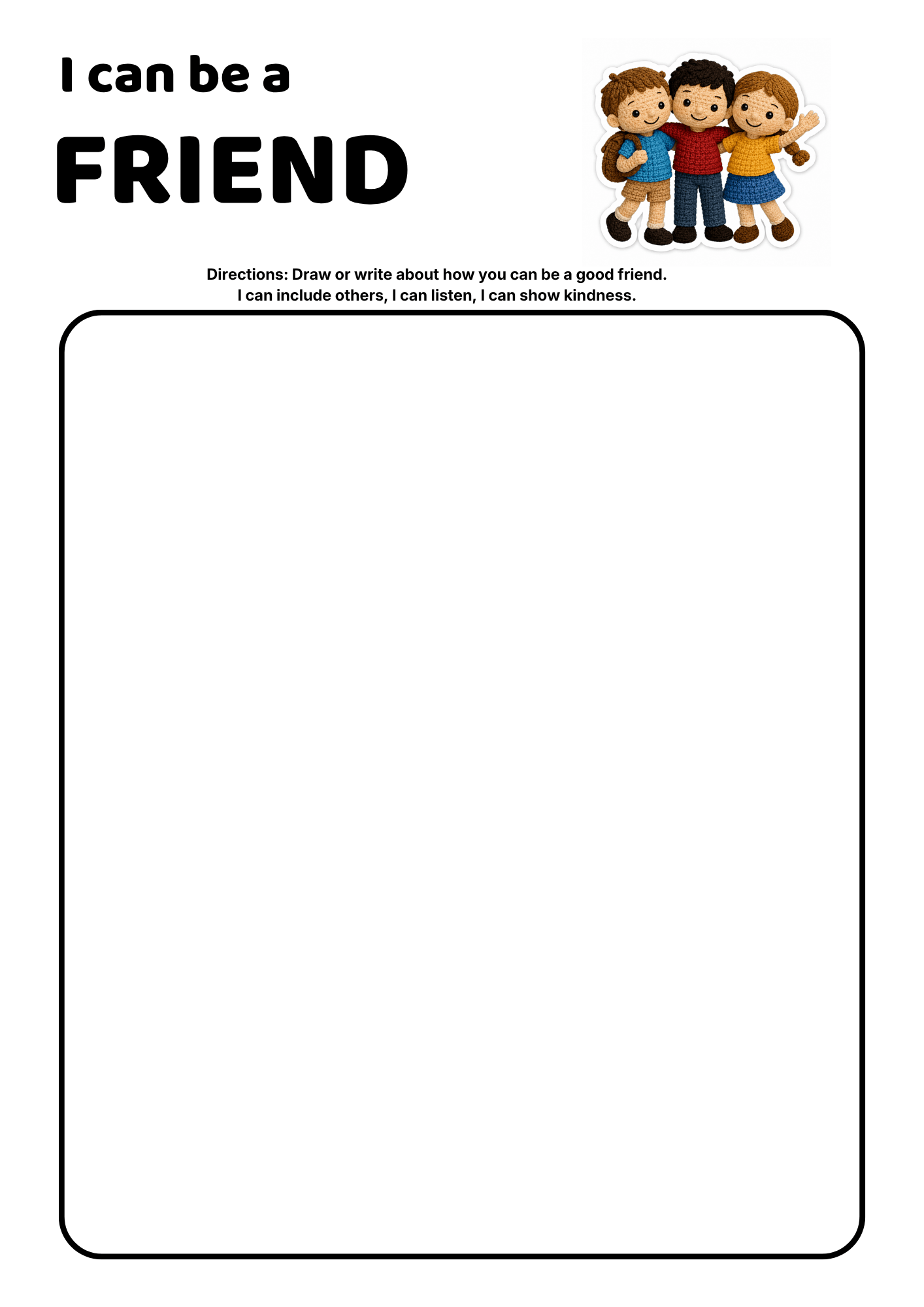
It includes three simple prompts:
- I can include others.
- I can listen.
- I can show kindness.
Children can choose one idea or combine several.
The large drawing space also makes the activity suitable for children who are not yet confident writers.
Download the free I Can Be a Friend worksheet.
4. Talk about friendship through everyday situations
Friendship discussions do not need to become long lessons.
Everyday classroom moments can provide opportunities to practise the same ideas.
Before group work, discuss what listening and including others might look like.
Before a game, talk about taking turns and responding when things do not go our way.
After a disagreement, allow children time to settle before helping them talk through what happened.
If a child needs a more structured reflection following an incident, our Understanding Behaviour Activity may also be useful once everyone is calm.
5. Revisit the ideas
One worksheet will not teach every aspect of friendship, but it can help begin a conversation.
Return to the children’s ideas throughout the week.
You might ask:
“Can anyone think of a time we included someone today?”
Keep the discussion supportive. Children do not need to share personal experiences publicly.
The aim is to give children opportunities to notice and practise small acts of friendship throughout the school day.
Download the free friendship worksheet
The I Can Be a Friend worksheet is available as a free one-page printable.
Children can draw, write or talk through their ideas, making it suitable for a range of ages and abilities.
Download it here: https://anokhalearning.com/i-can-be-a-friend/
You can also explore more free resources in Anokha’s Behaviour & Relationships collection.
Over 10,000 Irish primary teachers have taken an Anokha course
Summer 2027 Course Updates
We're planning our Summer 2027 courses. The course lineup, Department of Education approval and booking dates are not yet confirmed. Join our email list for useful teaching ideas, free resources and updates about our summer courses.
Get Anokha UpdatesUnsubscribe at any time.