
Moving to a new class can bring a mixture of excitement, curiosity and uncertainty for children.
There might be a different classroom, new routines, a new teacher or changes to familiar friendship groups.
Giving children opportunities to ask questions, share information and become familiar with what comes next can be a useful part of preparing for these changes.
Here are five simple activities to try with your class before the end of the school year, or whenever a class transition is approaching.
1. Write a letter to your new teacher
One way to begin is to give children an opportunity to introduce themselves in their own words.
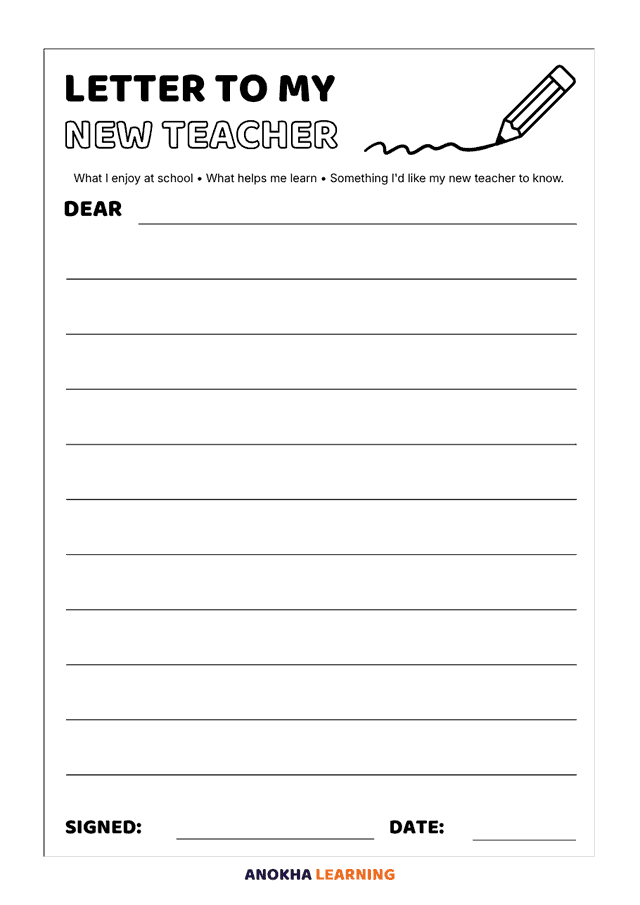
Our free Letter to My New Teacher worksheet includes three prompts:
- What I enjoy at school
- What helps me learn
- Something I’d like my new teacher to know
Children can use these prompts to write a letter about themselves, their interests and the things that help them feel comfortable at school.
For some children, this might mean explaining that they enjoy art, football or reading.
Others might want their teacher to know that they prefer having instructions written down or that they like a little time to think before answering questions.
There is no need to turn it into a formal assessment. It is simply an opportunity to listen to what matters to the child.
Download our free Letter to My New Teacher worksheet.
2. Questions for my new class
Ask children to think of something they would like to know before moving to their next class.
You could write their questions on the board or allow them to submit them privately.
For example:
- Where will we keep our belongings?
- Will we have homework?
- What will stay the same?
- What happens if I need help?
- Will we still have time for our favourite activities?
Where possible, arrange for the receiving teacher to answer some of these questions.
If the teacher has not yet been assigned, keep the questions and respond when the information is available.
Avoid promising arrangements that have not been confirmed.
3. A new classroom preview
If it is possible within your school, arrange a short visit to the new classroom.
Children can look around, notice the layout and become familiar with where they will be learning.
If a visit is not possible, photographs of the classroom or a simple explanation of the daily routine may be useful.
Discuss what might change and what will remain familiar.
Even small details, such as where children enter the classroom or where they keep their books, can help them prepare.
4. What helps me learn?
Give children a few minutes to reflect on the things that help them participate in classroom activities.
You might ask:
- What helps you get started with your work?
- What do you do when something feels difficult?
- Is there something your teacher does that makes learning easier?
- What is something you are proud of learning this year?
Children can share their answers in conversation, write a short note or include an idea in their letter.
This can also help teachers notice supports and routines worth carrying forward.
Keep any sensitive information within the school’s established handover arrangements.
5. One thing I’m looking forward to
Finish with a positive but realistic reflection.
Ask children to name one thing they might be looking forward to in their next class.
They could write it on a small card, draw a picture or share it with a partner.
Some children may not feel excited about the change, and that is fine too.
Allow room for different feelings rather than expecting every child to be enthusiastic.
The goal is to help children feel heard and better informed about what comes next.
Supporting transitions between classes
Class transitions are part of primary school life, but children do not all experience them in the same way.
Predictable information, opportunities to communicate and thoughtful teacher handovers can make the process more manageable.
The Department of Education’s guidance on managing transitions also considers the movement of pupils from class to class, including special class settings.
A short letter will not answer every question about transition, but it can give a child a straightforward way to share something important with their new teacher.
Download the free Letter to My New Teacher worksheet
Our one-page printable includes writing prompts and space for children to prepare a letter.
It is free to download and suitable for adapting to different class levels.
Download Letter to My New Teacher
For another class-reflection activity, explore our Looking Back, Looking Forward activities.
You can also browse all our free Transitions & Routines resources.
Over 10,000 Irish primary teachers have taken an Anokha course
Summer 2027 Course Updates
We're planning our Summer 2027 courses. The course lineup, Department of Education approval and booking dates are not yet confirmed. Join our email list for useful teaching ideas, free resources and updates about our summer courses.
Get Anokha UpdatesUnsubscribe at any time.